

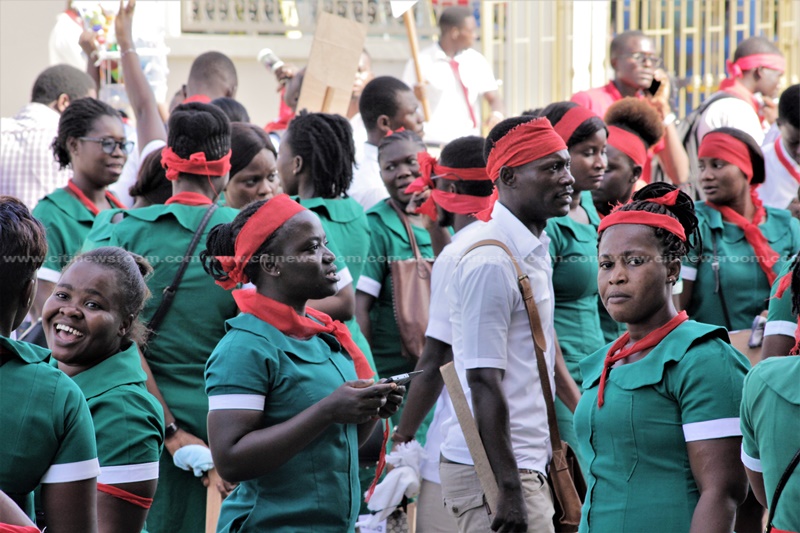
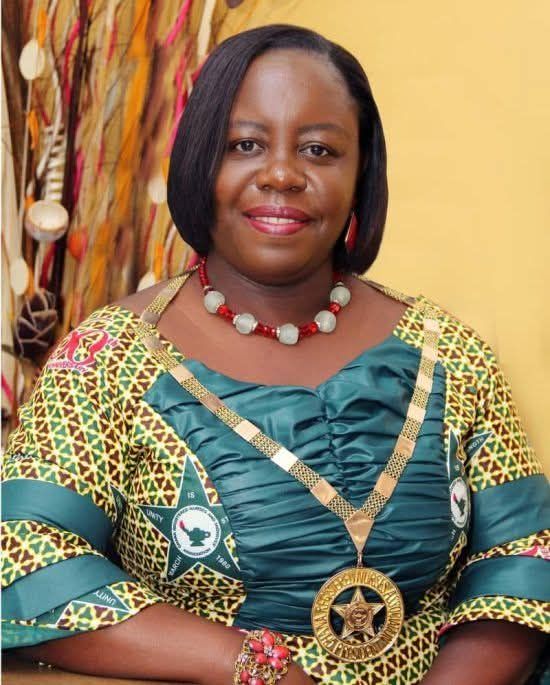
HOSPITALS across Ghana are grappling with disruptions as members of the Ghana Registered Nurses and Midwives Association (GRNMA) embark on a nationwide strike.

While the association cites longstanding issues such as poor working conditions and unpaid allowances, the timing of the strike—following a government directive to revoke post-election recruitments—has sparked debates about potential political motivations. Opposition parties have voiced support for the striking health workers, urging them to persist until their demands are addressed.

At the heart of this unfolding drama lies a storm of accusations, with fingers pointing toward the New Patriotic Party (NPP) and its Minority in Parliament.
The opposition party, critics allege, is not merely showing solidarity with the health workers but may be actively encouraging the industrial action to score political points against the ruling Mahama administration.
In an exclusive conversation, a senior medical doctor, who requested anonymity due to the sensitive nature of the issue, described the strike as “a planned political move.”
According to the source, the coordination and intensity of the strike raise red flags, suggesting possible backroom involvement by key political actors.
The names of some NPP bigwigs in the Minority surfaced repeatedly in these claims, with suggestions that they are quietly championing the cause – not necessarily out of empathy for the health workers, but as part of a broader strategy to destabilize the government.
These claims gained traction following a fiery press conference held by Minority Members of Parliament. The MPs came out strongly against the Mahama administration, accusing it of handling the strike in “bad faith” and turning a blind eye to the legitimate needs of healthcare professionals.

“The government’s approach has been dismissive, slow, and insincere,” one Minority MP said. “The lives of Ghanaians are at stake, and this administration is more concerned with appearances than action.”
The Minority’s statements – though wrapped in advocacy – have fueled speculation that the strike is being politicized.
Political analysts say the tone of the press conference was telling. Rather than focusing on urging a swift resolution, the opposition took the opportunity to lambast the government’s entire handling of the public sector, linking the GRNMA impasse to broader accusations of governance failure.
Meanwhile, government officials have remained tight-lipped, careful not to directly confront the allegations. However, some insiders suggest that the administration is growing increasingly concerned about the optics and implications of the strike, especially as the government is working assiduously and inches toward resetting the economy and restoring the hopes of the Ghanaian people.
For the GRNMA, the line between genuine advocacy and political manipulation is becoming dangerously thin. While the association has insisted that its members’ demands are long overdue and entirely justified, it has not openly addressed the allegations of political influence.
To the average Ghanaian, however, the politics are background noise. What matters is that hospital beds remain unattended, pregnant women are turned away from maternity wards, and patients with chronic illnesses face mounting anxiety over when – or if – their next treatment will come.
In the end, the strike may well be remembered not only for the medical crisis it created but also for the deeper questions it raised about politics, power, and the vulnerability of Ghana’s vital institutions.
As the standoff continues, the nation watches – not just for signs of resolution, but for clues about who is really pulling the strings behind this dramatic turn in Ghana’s healthcare sector.
Stay with the Nationaltymes.com for ongoing in-depth coverage and analysis.
Source: Nationaltymes.com