

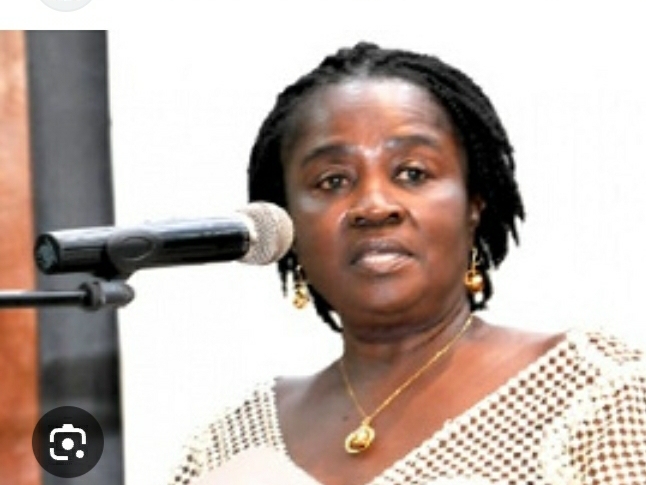
GHANA’s Vice President, Her Excellency Professor Jane Naana Opoku-Agyemang, delivered a powerful address today reaffirming Ghana’s leadership in the fight against corruption and calling for a renewed continental effort to revitalize Africa’s anti-corruption architecture.

Speaking to a distinguished audience that included ministers of state, members of the diplomatic corps, African policy leaders, civil society actors and governance experts, the Vice President marked the 20th anniversary of the African Union Convention on Preventing and Combating Corruption with a comprehensive account of Ghana’s anti-corruption journey — past, present, and future.
A Strong Foundation, Yet Serious Challenges Remain
Vice President Opoku-Agyemang highlighted Ghana’s pioneering role in ratifying the AU Convention in 2007 and in submitting one of the earliest reports to the African Union Advisory Board on Corruption (AUABC).
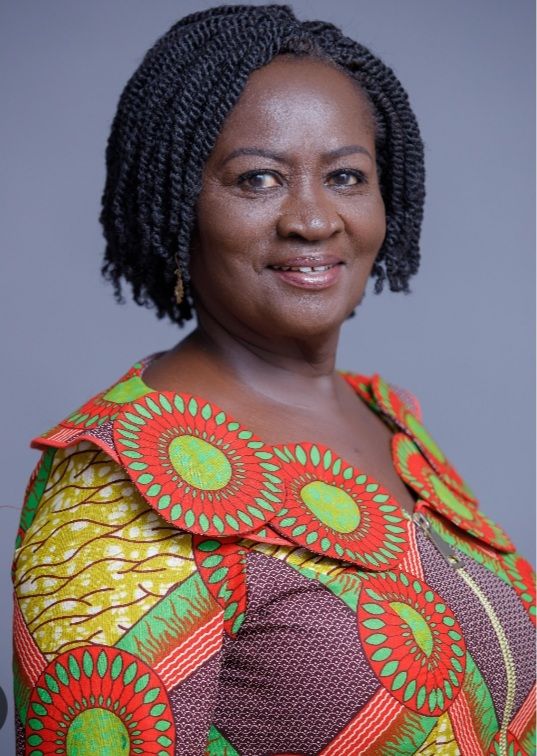
She outlined the nation’s institutional architecture, which includes the 1992 Constitution, landmark legislation such as the Whistleblowers Act and the Right to Information Act, and key agencies like the Office of the Special Prosecutor.
Despite these strong foundations, the Vice President was candid about Ghana’s current challenges. Citing data from Transparency International, the Ghana Statistical Service, and the IMF, she acknowledged stagnating and in some cases declining performance on key corruption indicators. She emphasized that over GH¢5 billion is lost to bribery annually and that citizens’ concerns about weak enforcement and political interference remain valid.
“These concerns reflect not just dissatisfaction,” she said, “but an expectation that Ghana can and must do better.”
Revitalization Under the Mahama Administration
In a clear policy shift, the Vice President outlined President John Dramani Mahama’s new anti-corruption strategy, built on both political will and institutional reform.
A major initiative, Operation Recover All Loot (ORAL), has been launched to reclaim misappropriated public funds. The President has also introduced a code of conduct for all appointees and announced plans to review the 1992 Constitution.
For the first time since 1992, a Presidential Advisor has been appointed specifically to coordinate the National Anti-Corruption Program, tasked with uniting state agencies, civil society, and international partners around a strategic agenda.
This includes cooperation with the State Interests and Governance Authority (SIGA), advancing legislative reform, and supporting the Attorney-General in prosecuting corruption.
A New Legislative Push and Citizen Empowerment
Key among the next steps is the imminent introduction of the revised Conduct of Public Officers Bill, which the Vice President promised would undergo extensive stakeholder engagement. She also called for a tougher asset declaration regime and sustainable financing for independent anti-corruption bodies.
Recognizing that laws alone are not enough, Professor Opoku-Agyemang stressed the importance of citizen involvement. She praised investigative journalists and civil society watchdogs and emphasized youth engagement as a cornerstone of long-term success.
“Young Africans are our greatest asset,” she said, “and their digital savviness offers new tools to hold power accountable.”
Africa-Wide Leadership and Economic Imperatives
Linking governance to development, the Vice President tied corruption control directly to Africa’s growth agenda. With the continent requiring over $2.8 trillion to meet climate adaptation needs, she warned that every cedi lost to corruption is a lost opportunity for economic and social transformation.
Ghana’s renewed commitment, she said, is about reclaiming its position as a continental leader not through rhetoric but through measurable progress.
A Vision for the Future
In closing, the Vice President urged all Africans to see the fight against corruption not as an abstract policy goal, but a moral and generational imperative.
“Corruption is not inevitable. It is a choice,” she said. “So is integrity. And the Africa we build today is the Africa our children will inherit tomorrow.”
Her address received a standing ovation and is already being hailed across the continent as a bold reset in the ongoing struggle for integrity and good governance in Africa.
Source: Nationaltymes.com