


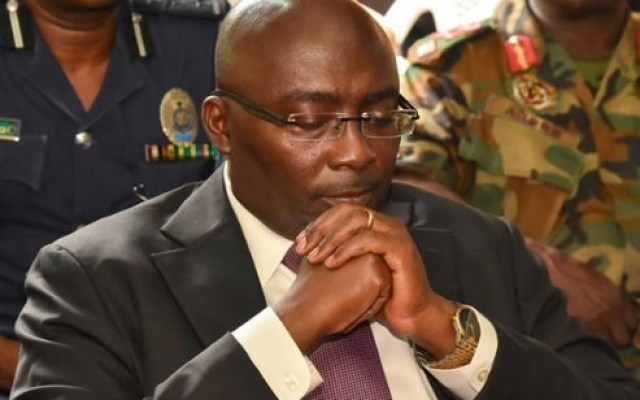
DR. MAHAMUDU Bawumia, former Vice President and head of the Economic Management Team (EMT) under the New Patriotic Party (NPP) administration, is facing mounting criticism over his recent assertions regarding the stabilization of the Ghanaian cedi.

In a recent address to the Young Executive Forum in London, Dr. Bawumia attributed the cedi’s appreciation to policies implemented by the previous NPP government, specifically highlighting the gold reserves initiative.
He challenged the current administration, stating, “If you ask the NDC to point out exactly what policy they have implemented that has resulted in the appreciation of the Cedi, they cannot tell you one that has been implemented — not merely talked about but implemented.”
However, this claim has been met with skepticism and criticism from various quarters. Dr. Sharif Khalid, Economic Advisor to the Office of the Vice President, refuted Bawumia’s assertions, attributing the cedi’s stability to the current government’s fiscal discipline and commitment to economic programmes.
“You would see that even in the wake of the gold-for-oil programme, the Cedi was not performing as it should, and inflation was still rising. So, where is this claim coming from?” he questioned during an interview on Eyewitness News.
Further criticism came from the National Democratic Congress (NDC), with General Secretary Fifi Fiavi Kwetey highlighting what he termed as Bawumia’s “credibility deficit.” Mr. Kwetey pointed out inconsistencies in Bawumia’s statements over the years, including his 2012 assertion that “when the fundamentals are weak, the exchange rate will expose you,” which he later claimed was made in 2014.
Mr. Kwetey also criticized Bawumia for promising to move the economy from taxation to production, only to introduce multiple taxes during his tenure for 8 years in power.
The NDC’s head of legal affairs, Edudzi Tamekloe, accused Bawumia of implementing short-term, unsustainable policies that negatively impacted the economy.
He cited the use of Eurobonds to artificially strengthen the cedi, which he described as putting the currency on “life support.” “Consistently, they were doing 2 billion dollars averagely every year then in 2022, the rating agencies downgraded Ghana. Immediately upon the downgrade was when the cedi now had to face its true strength,” Tamekloe explained.
As Ghana navigates its economic challenges, the debate over the cedi’s stabilization and the credibility of those claiming responsibility continues to be a focal point in the nation’s political discourse.
Source: Nationaltymes.com