

National Tymes News Desk

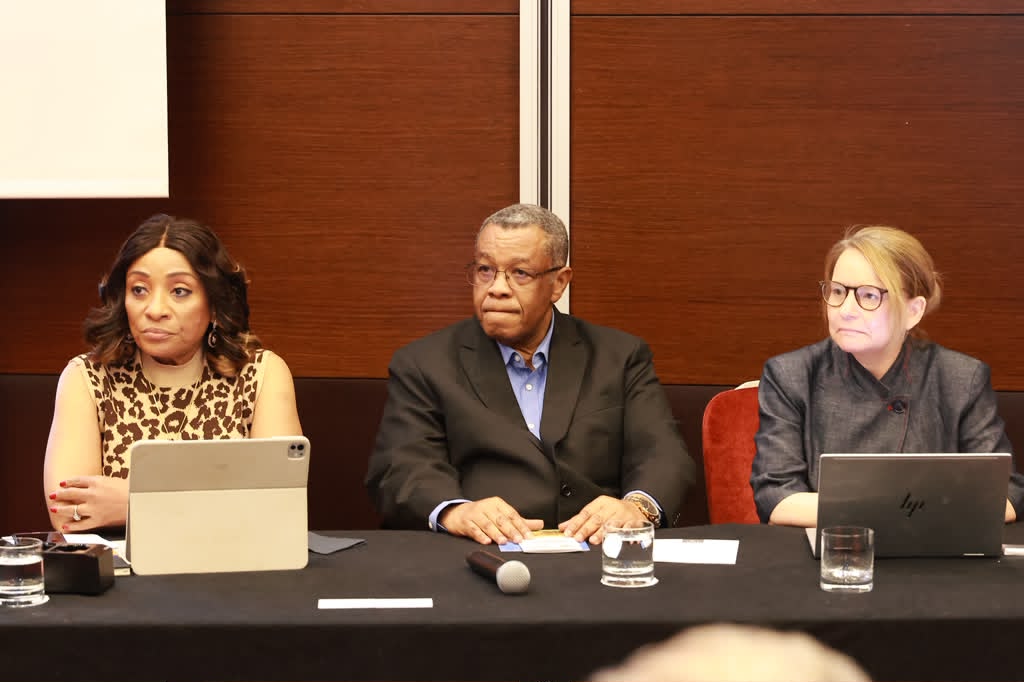
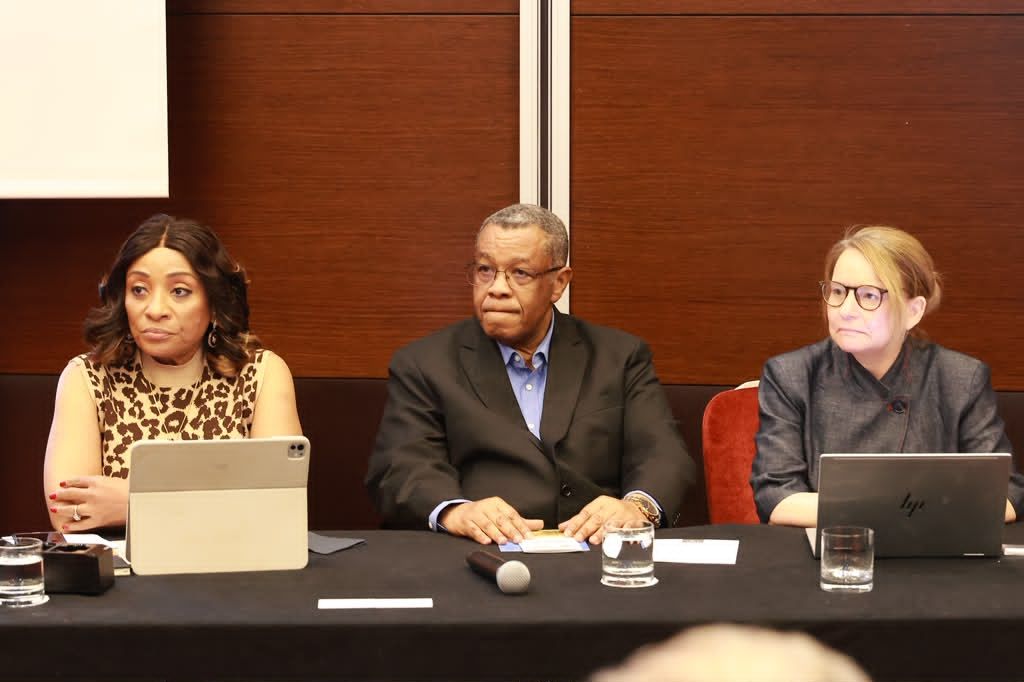
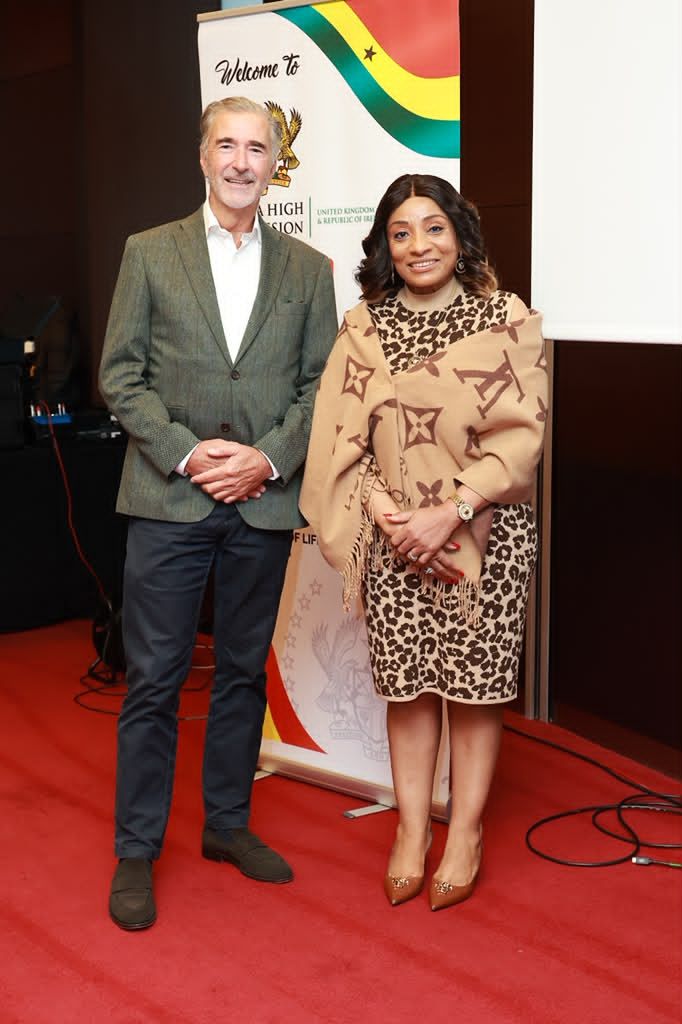
GHANA’S High Commissioner to the United Kingdom and Ireland, Her Excellency Mrs. Sabah Zita Benson, has urged international investors to take advantage of the country’s investment opportunities, describing Ghana as a gateway to the African and global markets.

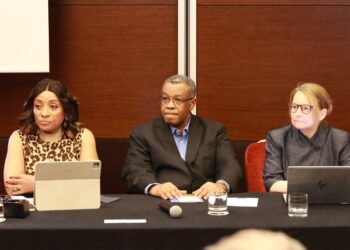
Addressing business leaders, investors, financiers and development partners at the Ghana Investor Day in London on Thursday, October 15, 2026, Mrs. Benson said Ghana was ready to welcome investors and support businesses seeking to expand their operations across Africa.
The event, held at Park Plaza Westminster Bridge, was organised by the UK-Ghana Chamber of Commerce (UKGCC), which is celebrating its 10th anniversary this year. It was held on the theme, “From Confidence to Capital.”
Speaking on behalf of President John Dramani Mahama, the High Commissioner thanked the UKGCC, Ghana JET, the UK’s Foreign, Commonwealth and Development Office (FCDO), the Department for Business and Trade, Ghana International Bank, and institutions from Ghana, including GIPA, GIIF and the 24-Hour Economy Secretariat, for supporting the event.
AFRICA AT A CROSSROADS
Mrs. Benson said Africa was at a critical point in its development, with the decisions taken today likely to shape the continent’s economic future and opportunities for its growing population.
She noted that by 2050, more than one in four people in the world and one in three young people globally would be African.
“They will either build the factories of the future or queue for jobs that do not exist. That choice is being made now, in rooms like this one,” she said.
The High Commissioner expressed concern that manufacturing accounted for only 10.8 per cent of Africa’s Gross Domestic Product (GDP), compared with the global average of 16.5 per cent.
She added that although Africa was home to nearly one in five people worldwide, the continent produced less than two per cent of global manufacturing output.
According to her, Africa’s investment potential was often viewed mainly through the risks involved, despite the attractive returns that well-structured projects could offer.
She said the continent needed more long-term investment to support industrial growth, adding that the African Export-Import Bank (Afreximbank) estimated Africa’s annual trade finance gap at about US$100 billion.
Mrs. Benson also called for greater investment of African savings, pension funds and sovereign wealth in productive projects across the continent, alongside foreign investment.
MAHAMA’S RESET AGENDA
The High Commissioner said industrialisation was central to President Mahama’s Reset agenda and Ghana’s plans to transform its economy.
She outlined five key areas through which the government was pursuing this goal.
The first is the 24-Hour Economy, which she said was designed to coordinate round-the-clock production, increase output and create more jobs, particularly for young people.
She said the 24-Hour Economy Authority Act, which received presidential assent in February 2026, provided a framework for coordinating the initiative.
The second area is the development of strategic industries. Mrs. Benson said Ghana’s Automotive Development Policy had supported the establishment of ten licensed vehicle assemblers and seven assembly plants since 2019, while plans to develop local component manufacturing would deepen local participation in the industry.
She also highlighted the garment manufacturing park under the country’s textiles policy and efforts to strengthen pharmaceutical production, including the drive towards World Health Organisation standards and vaccine manufacturing.
The third area is adding value to Ghana’s natural resources.
Through the Ghana Integrated Aluminium Development Corporation, she said, the country was working towards an integrated bauxite-to-aluminium industry while also pursuing local processing of lithium and other critical minerals.
The fourth is linking agriculture to industry. Under the government’s agribusiness agenda, commercial farmers are being linked to processors to help transform cocoa, cashew, cassava and sugarcane into finished products in Ghana.
The fifth area is industrial infrastructure. Mrs. Benson said Ghana was developing integrated industrial parks with strategic partners and implementing the Big Push infrastructure programme, backed by GH¢30 billion in the 2026 Budget.
‘COME AND INVEST IN GHANA’
Mrs. Benson urged investors to establish factories in Ghana and use the country as a base to serve markets across Africa.
She pointed to Accra’s role as the host city of the African Continental Free Trade Area (AfCFTA) Secretariat, describing Ghana as a strategic location for businesses seeking to access the wider African market.
She also highlighted measures to strengthen investor protection under the new Ghana Investment Promotion Authority Act, which she said had expanded GIPA’s mandate, including the introduction of a dedicated mechanism for addressing investor complaints.
“If you encounter a difficulty, there is a door to knock on, and a team to answer it,” she assured investors.
The High Commissioner encouraged prospective investors to ask difficult questions about Ghana’s investment environment, saying the country’s institutions were ready to engage with them.
“Please come with your toughest questions. We would much rather have a hard conversation this morning than a lost opportunity next year. Probe the numbers, test the structures, and tell us frankly what would make a project bankable in your eyes,” she said.
She advised project sponsors to prepare thoroughly before approaching investors, stressing the importance of clear financial information, realistic timelines and an honest assessment of potential risks.

Mrs. Benson also called on Ghanaians living in the United Kingdom to play a greater role in strengthening economic ties between the two countries.
She described the diaspora as an important bridge between the two markets, noting that its members understood both business environments and enjoyed relationships in both countries.
“My door at the High Commission remains open, and we are working to make the services you rely on faster and simpler,” she added.
The High Commissioner expressed hope that the investor day would lead to meaningful business contacts, stronger partnerships and investment agreements.
She concluded that Ghana’s future economic growth would depend on expanding local production, strengthening financing institutions and increasing trade across national borders.
“Ghana will be built in our factories, financed by our institutions and traded across our borders. Under the leadership of His Excellency President Mahama, Ghana is more than ready for business,” she said.
Source: Nationaltymes.com