



Nat’l Tymes News Desk

THE BANK of Ghana (BoG) has released official data showing that its Domestic Gold Purchase Programme (DGPP) has recorded significant financial losses since it began in 2021.
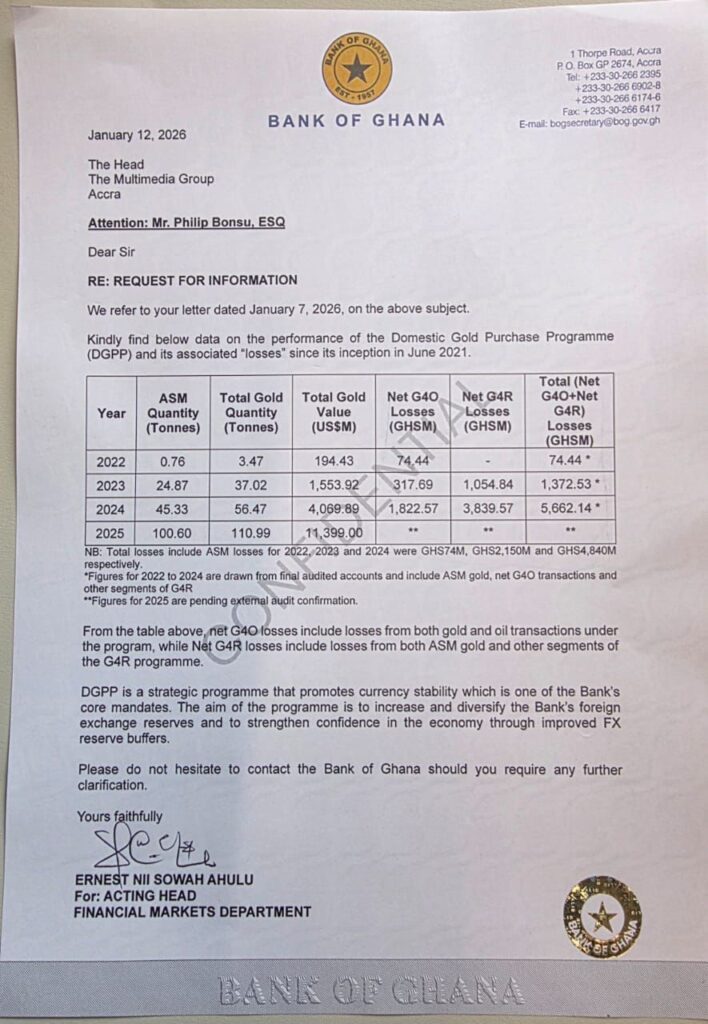
The figures were released after a Right to Information (RTI) request by Asempa FM and were contained in a letter dated January 12, 2026, signed by the Acting Head of the Financial Markets Department, Ernest Nii Sowah Ahulu. The letter was addressed to Mr. Philip Bonsu, Head of the Multimedia Group.
According to the central bank, the DGPP was introduced to help stabilize the Ghana cedi, build foreign exchange reserves, and boost confidence in the economy. Under the programme, the BoG buys gold locally, including gold from artisanal and small-scale miners, to strengthen its reserves.
However, the data provided shows that the programme has incurred growing losses over the years.
In 2022, the Bank bought a total of 3.47 tonnes of gold valued at about US$194 million and recorded a net loss of GH₵74.44 million.
In 2023, gold purchases increased sharply to 37.02 tonnes valued at US$1.55 billion, but losses also rose to GH₵1.37 billion. The situation worsened in 2024, when total gold purchases reached 56.47 tonnes with a value of over US$4 billion. That year alone, the programme recorded losses of about GH₵5.66 billion.
For 2025, the Bank disclosed that it purchased 110.99 tonnes of gold worth approximately US$11.4 billion, but said the loss figures for that year are still being reviewed and will be confirmed after an external audit.

The Bank explained that the losses include those arising from Gold-for-Oil (G4O) and Gold-for-Reserves (G4R) transactions, as well as losses linked to artisanal and small-scale mining (ASM) gold purchases. Between 2022 and 2024, ASM-related losses alone amounted to billions of cedis.
The disclosure directly contradicts earlier claims by the NPP Minority Caucus in Parliament, which had insisted that the gold purchase programme did not record any losses.
The Bank of Ghana said it remains committed to transparency and invited further requests for clarification on the programme’s operations and financial outcomes.
The RTI request that triggered the disclosure was submitted on January 7, 2026, amid growing public interest in the true cost and impact of the gold purchase initiative.
Source: Nationaltymes.com