



Nat’l Tymes News Desk

THE DIRECTOR of Research at the Institute of Economic Affairs (IEA), Prof. Alexander Bilson Darku, has dismissed claims that Ghana lost $1.7 billion through the Ghana Gold Board (GoldBod), saying the figure largely reflects accounting and foreign exchange valuation effects rather than actual money lost by the state.
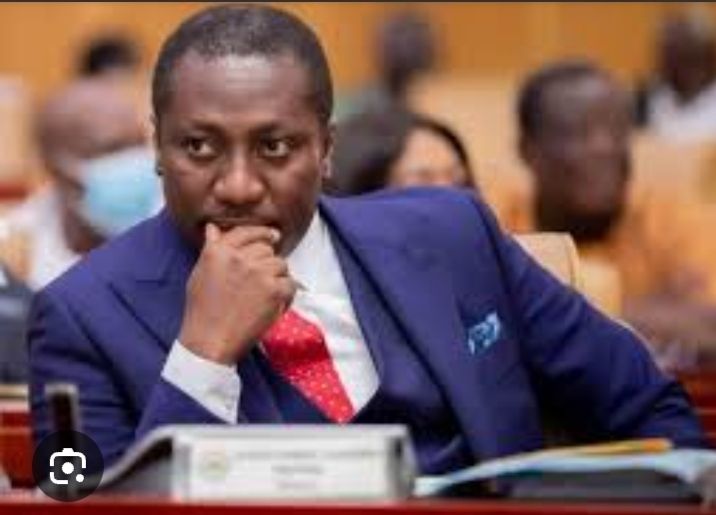
His comments follow claims by the Minority Leader in Parliament, who reportedly cited a GoldBod report to accuse the government and the Chief Executive Officer of GoldBod, Lawyer Sammy Gyamfi, of causing a $1.7 billion loss.
However, Prof. Darku said such an interpretation does not accurately reflect what the figures mean.
Revenue Mistaken for Loss:
Speaking on the issue, Prof. Darku explained that some of the amounts described as losses were, in fact, revenues received by GoldBod from the Bank of Ghana for gold purchased and exported on behalf of the central bank.
“The money that the Central Bank paid to GoldBod on behalf of buying and exporting the gold on its behalf, so they actually constitute revenue to GoldBod. I don’t understand why somebody would call the revenue as a loss,” he wuizzed.

According to him, although the payment may appear as a cost on the books of the Bank of Ghana, it is recorded as revenue on the books of GoldBod, another state institution.
He therefore argued that it should not automatically be presented as money lost by Ghana.
Foreign Exchange Valuation:
Prof. Darku further explained that the biggest component of the reported $1.7 billion, which he said accounts for almost 90 per cent of the figure, relates to foreign exchange valuation differences.
He explained that when GoldBod purchases gold from miners using one exchange rate and the Bank of Ghana later values the export proceeds using a different reference rate, the difference can appear as a loss in the accounts.
Using an example, he said if GoldBod purchases gold at an exchange rate of GH¢12 to the dollar but the Bank of Ghana later values the proceeds at GH¢10 to the dollar, the GH¢2 difference could appear as a loss in the accounts.
However, he stressed that such a difference does not necessarily mean that the country has physically lost the money.

“So it is merely a book accounting issue, but not a significant loss to the nation,” Prof. Darku said.
‘Left Hand Giving to the Right Hand’:
The IEA Research Director said the matter should also be viewed from the perspective of government accounting, since GoldBod and the Bank of Ghana are both public institutions.
“If you look deep into it, it is one government agency paying another government agency the same amount,” he said.
He explained that while the transaction may show a loss on the books of one state institution, it could correspondingly appear as a gain or revenue on the books of another.
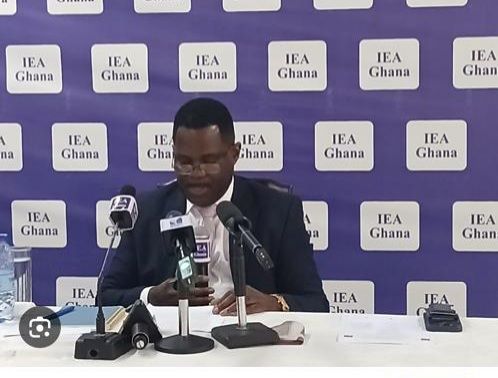
“To the government, its monetary authority, which is the Central Bank, has made that loss; to the government, it has made that gain. There’s no cost. It is left hand giving to the right hand,” he stressed.
Prof. Darku consequently urged the public and political actors to exercise caution when interpreting financial statements and accounting figures relating to GoldBod.
He said the reported $1.7 billion figure should not be presented without explaining the accounting and foreign exchange factors behind it.
He also suggested that political attacks on the GoldBod Chief Executive, Lawyer Sammy Adu Gyamfi, based solely on the $1.7 billion figure could therefore be misplaced.
Source: Nationaltymes.com