


Nat’l Tymes News Desk

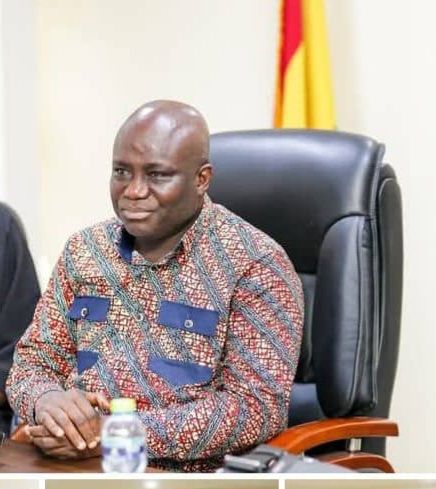
THE MINISTER for Food and Agriculture, Hon. Eric Opoku, MP, has assured Ghanaians that the government’s Nkokɔ Nkitinkiti initiative is not a free giveaway programme but a long-term intervention aimed at creating jobs, improving household incomes, and boosting local poultry production.
Speaking at a town hall meeting in Kumasi with poultry farmers, youth groups and traditional leaders, the Minister said there were many misconceptions about the programme, stressing that its main objective is to help families build sustainable poultry businesses.
According to him, the initiative is expected to benefit about 500,000 households across the country over the next three years, with special attention given to women, persons with disabilities and unemployed youth in both rural and peri-urban communities.
Hon. Opoku explained that beneficiaries would not simply receive day-old chicks. Instead, they would first undergo a two-week practical training conducted by Ministry extension officers and certified veterinary professionals.
The training will cover poultry management, feed preparation using local ingredients, disease prevention, record keeping and marketing.
After the training, each approved household will receive 25 improved kuroiler day-old chicks, starter feed for six weeks, vaccines, a poultry management guide translated into Twi, Ga, Ewe and English, as well as access to a toll-free veterinary support line.
The Minister said the government had also made arrangements to ensure farmers have ready markets for their birds. He disclosed that the Ministry is partnering with aggregators, school feeding caterers and cold store operators in Kumasi, Accra and Tamale to buy mature birds at agreed prices, helping farmers avoid losses after production.
Explaining the choice of the programme’s name, Hon. Opoku said “Nkitinkiti”, meaning “small, small”, reflects the government’s strategy of encouraging households to start on a manageable scale before expanding their poultry businesses.
He noted that pilot projects carried out in Offinso and Ejura produced encouraging results, with about 1,200 participating households reportedly making an average profit of GH¢1,850 per production cycle after deducting feed and veterinary costs. Many, he said, used the income to pay their children’s school fees and reinvest in poultry production.
The Minister also dismissed claims circulating on social media that the programme was meant only for supporters of the governing party. He said beneficiary selection would involve District Assemblies, traditional authorities and faith-based organisations, adding that beneficiary lists would be publicly displayed at District Assembly offices to ensure transparency.
He further rejected claims that government would reclaim the birds after distribution, explaining that beneficiaries would own the birds completely once they completed the required training.
Hon. Opoku said the initiative forms part of government’s broader strategy to reduce Ghana’s heavy dependence on imported frozen chicken, which costs the country more than 200 million dollars annually.
He expressed confidence that increasing local poultry production would create employment across the value chain, including feed production, transportation, veterinary services, processing and marketing.
Registration for the first phase of the programme in the Ashanti Region is expected to begin next month at all District Agriculture Directorates.
Applicants will be required to present a Ghana Card, possess basic literacy skills and commit to completing the training programme, with priority to be given to women-led households and unemployed youth.
One participant at the meeting, Nana Akosua Serwaa, a food vendor from Bantama, in an interview, said she initially believed the programme was politically motivated but changed her mind after hearing the Minister’s explanation.
“I thought it was politics at first, but when they explained the training and the guaranteed market, it made sense. If I can rear my own birds and supply my chop bar instead of depending on imported chicken, then this is an opportunity worth taking,” she said.
Source: Nationaltymes.com