

By: Lord Fiifi Quayle

AS THE NATIONAL Democratic Congress (NDC) marks its 33rd anniversary, the moment invites both celebration and reflection. Born out of Ghana’s revolutionary past, the NDC continues to play a central role in shaping the nation’s democratic journey – rooted in ideals forged during the tumultuous events of June 4, 1979.
June 4th Uprising: The Spark of a Revolution
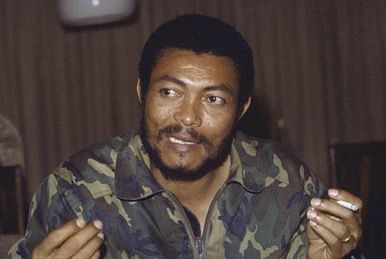
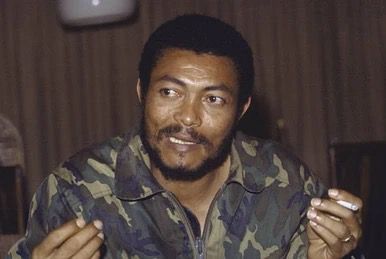
The June 4th Uprising was a defining chapter in Ghana’s political evolution. Spearheaded by a young Flight Lieutenant Jerry John Rawlings and backed by a coalition of patriotic youth and progressive forces, the movement sought to cleanse the nation of entrenched corruption, injustice and economic decay. More than a military mutiny, it was a nationwide revolt – a cry for accountability, probity and justice.
This movement gave way to the June 19th transition and later the formation of the Provisional National Defence Council (PNDC), which governed Ghana from 1981 to 1992. The PNDC ushered in radical reforms, emphasizing grassroots participation, decentralization, and local governance – principles that still echo through Ghana’s development landscape.
The Rise of a Third Force: Birth of the NDC
As Ghana returned to multi-party democracy, the dominant political traditions – the Convention People’s Party (CPP) and the United Party (UP) – seemed insufficient to capture the full spirit of the revolutionary era. Within the PNDC, a new vision emerged: a third force that fused the best of socialist and liberal democratic ideals.
Though briefly experimented with through the United National Convention (UNC), which brought together future political heavyweights such as Nana Akufo-Addo, Asiedu Nketia, Obed Asamoah and Goosie Tanoh, the real breakthrough came in Sunyani. There, Rawlings declared the end of coup cycles and the birth of a democratic revolution – giving rise to the NDC.
Formed through a Consultative Assembly, the NDC became a social democratic party grounded in the PNDC’s core values: probity, accountability and grassroots empowerment. Despite resistance from the UP tradition, the NDC quickly gained national traction.
A Legacy of Leadership and Endurance
Over three decades later, the NDC has evolved from a revolutionary force to a governing party with a strong legacy. It has led Ghana under Presidents Rawlings, Atta Mills, and John Mahama, maintaining a focus on social justice and grassroots engagement.
But challenges remain. Corruption, inequality and political polarization continue to test Ghana’s democracy – making the NDC’s founding ideals more relevant than ever. To remain effective, the party must reinforce internal unity, embrace diverse perspectives and empower the youth – just as it did in its early days.
Bridging the Gap: A Call for Party-Government Synergy
Six months after the 2024 elections, concerns are growing over a perceived disconnect between the party and the government. Former President John Dramani Mahama – praised for his leadership – was notably absent from the June 4th and 33rd anniversary events, a silence that resonated deeply within the party’s ranks.
Key allies including Valerie Sawyer, Julius Debrah, Stan Dogbe and Calistus Mahama are being urged to foster stronger ties between the government and the party base. The NDC’s strength has always come from its grassroots and that connection must be actively preserved.
Looking Ahead: The Struggle Continues
As the NDC commemorates 33 years of existence, it does so with a renewed sense of purpose. The spirit of June 4th, the sacrifices of cadres and the vision of a progressive third force must continue to guide the party.
With unity, discipline and the energy of a new generation, the NDC can reclaim its revolutionary mantle – not just as a political party, but as a movement for justice and national renewal.
The torch has been passed. Now, more than ever, the youth must carry it forward.
Source: Nationaltymes.com