


A TOP OFFICIAL championing Ghana’s 24-hour economy policy has issued a sharp critique of the country’s over-reliance on imports, warning that Ghana is exporting jobs while importing even the most basic goods, including gizzard, intestines, and chicken cuts.

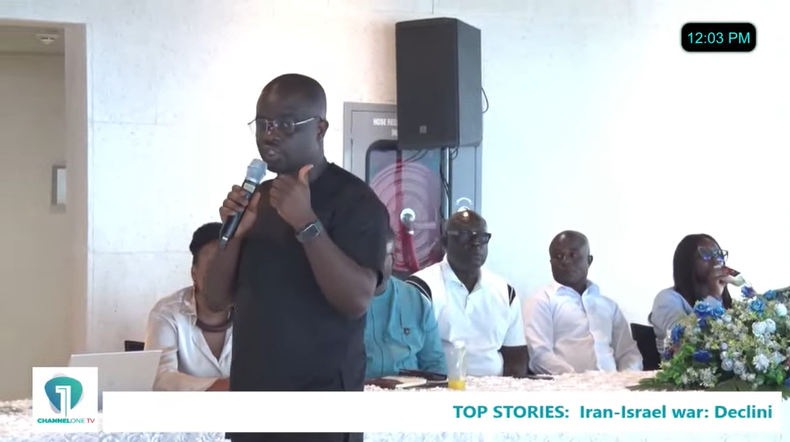
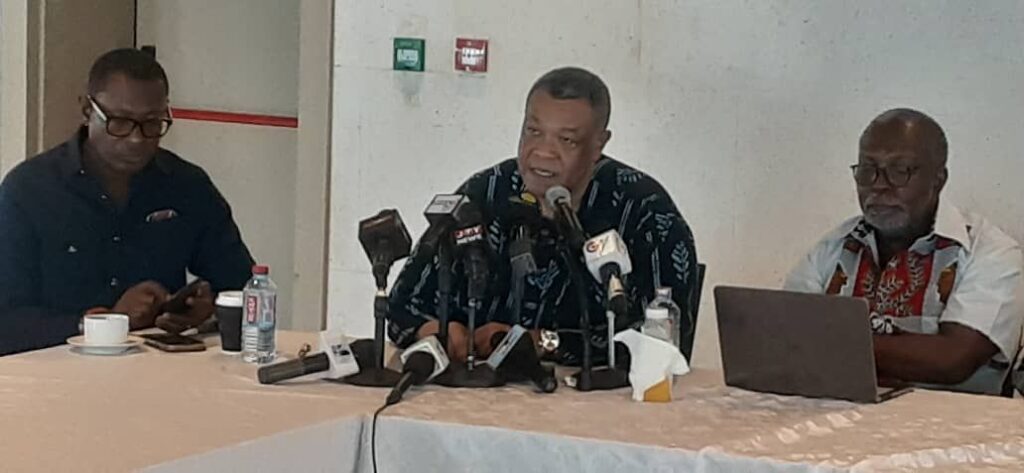
Speaking during a pre-launch briefing, Abdul-Nasser Alidu in charge of strategic and programmes at the 24-hour Economy Secretariat, revealed shocking statistics about Ghana’s import composition, especially in the food sector.
“It was surprising to discover that our second and third largest food imports are what we casually consume in chop bars — gizzards, towels, and other meat parts. These are imported from Europe, not slaughtered locally as many believe,” he said.
Mr. Alidu emphasized that this import-heavy structure creates ripple effects across the economy — from rising inflation to a weak cedi and a jobless growth model. “You give $100 million to set up a tomato factory, but most of that money leaves Ghana — buying land is the only local part. Machinery, raw materials, even technical expertise are all imported. So the investment becomes a long-term burden on our foreign reserves.”
“What we are experiencing is premature de-industrialization. We’ve moved straight from an agrarian economy to a service-driven one, without building a strong industrial base. That’s not growth, that’s a crisis,” he added.
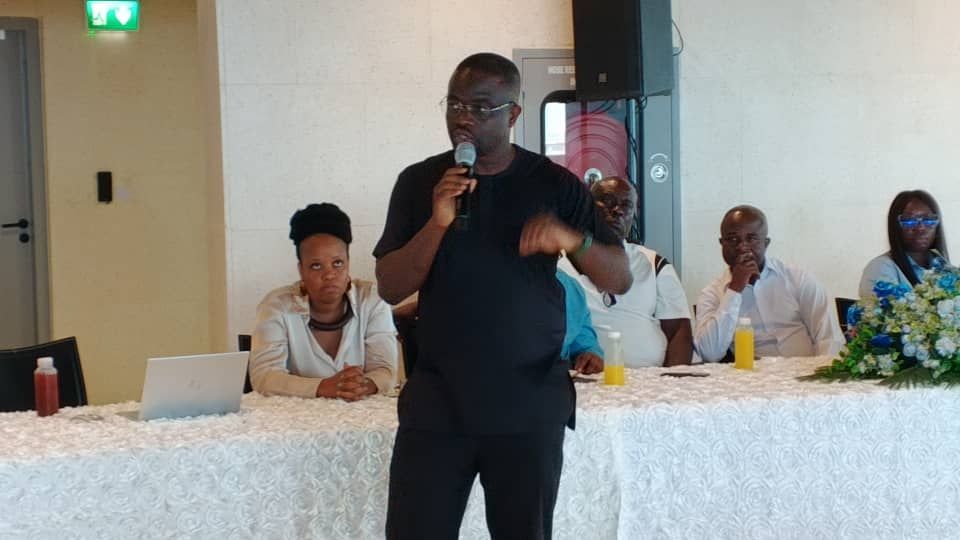
He criticized the country’s heavy reliance on imports, including for goods sold under the “trade and repairs” sector, noting that this model fuels capital flight and dependency.
He called for a radical shift: “We must build local production capacity, invest in technology, and create value from the raw materials we export. Until then, we remain at the mercy of global markets and foreign aid derived from our own resources.”
The comments come at a time when Ghana is grappling with trade imbalances, currency pressures, and rising calls for structural reforms to create a self-sustaining, industrialized economy.
Abdul-Nasser Alidu added that while GDP has seen steady growth over the past 30 years, job creation has not kept pace. In 1992, 10% GDP growth translated into 7% employment growth. Today, it’s just 2%. “Our economy is growing, but it’s not creating jobs for Ghanaians. That’s why we need a self-reliant, industrialized, and resilient 24-hour economy,” he stated.
The upcoming launch of the 24-hour economy initiative on July 2, 2025, is expected to kick off a national transformation agenda aimed at turning Ghana from a consumer economy into a productive, job-generating powerhouse.
The ASAR programme will also be implemented through targeted projects designed to address long-standing developmental bottlenecks, particularly in agriculture and manufacturing.
One of the major initiatives under discussion is the establishment of a major Eastern Economic Corridor—an infrastructure project aimed at balancing development between the country’s western and eastern zones.
The government criticized Ghana’s colonial-era infrastructure layout, which favoured extractive industries in the west and neglected potentially rich areas around the Volta Lake. “Despite hosting the world’s largest man-made lake by surface area, only 5% of Ghana’s cultivated land is irrigated,” Mr. Alidu lamented.
Currently, only about 33,000 hectares of cultivated land are under public irrigation, out of over 4 million hectares farmed nationally. Mr. Alidu confirm that the massive water reserves in the Volta Lake—estimated at 140 billion cubic meters—could support widespread irrigation without affecting power generation.
The government argues that by unlocking the potential of this underutilized region through irrigation and economic corridor development, Ghana can dramatically expand agricultural output, create jobs, and reduce poverty.
As part of ASAR, the state will also invest in developing projects to directly address structural challenges in agriculture, logistics, and land use planning. These interventions are part of the broader vision of Ghana’s 24-hour economy and job creation agenda.
Source: Nationaltymes.com