

By: National Tymes News Desk

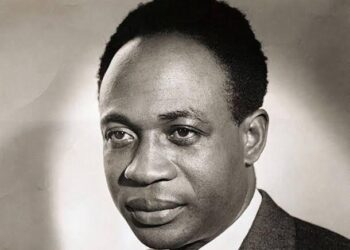
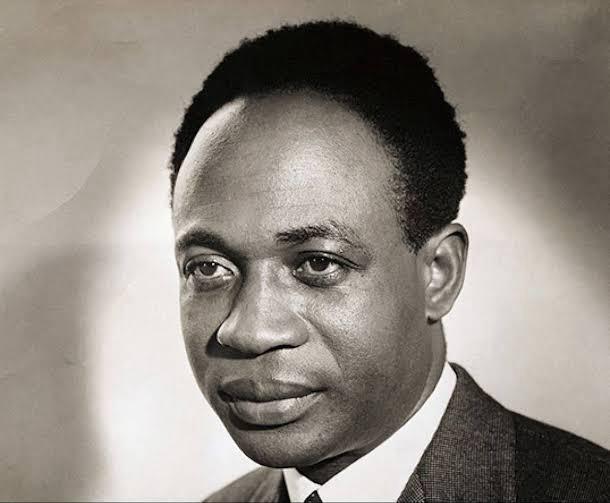
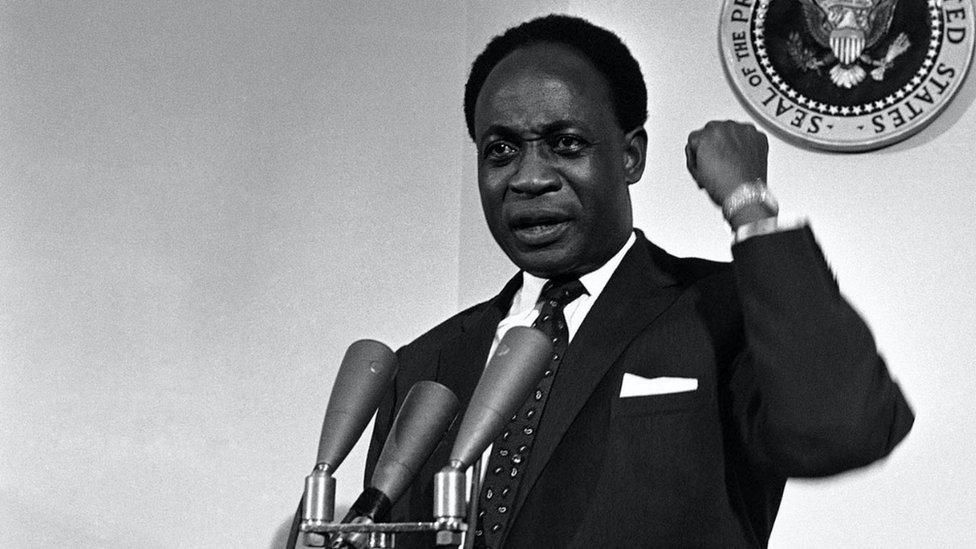
A SECRET letter dated 1966 has resurfaced, reigniting debate over how the National Liberation Council (NLC); the military government that overthrew Ghana’s first President, Osagyefo Dr. Kwame Nkrumah; sought to shape public opinion against him at home and abroad.
The correspondence, dated 14th March 1966 and signed by E.K. Mintah, Secretary to the NLC, was addressed to the Principal Secretary of the Ministry of Information. In it, the NLC reportedly directed the Ministries of Information and Social Welfare to mount a nationwide campaign to “destroy completely the image both at home and abroad of ex-President Kwame Nkrumah.”
The letter, shared by Snr. Journalist Alfred Ogbame, has since circulated widely on social media.
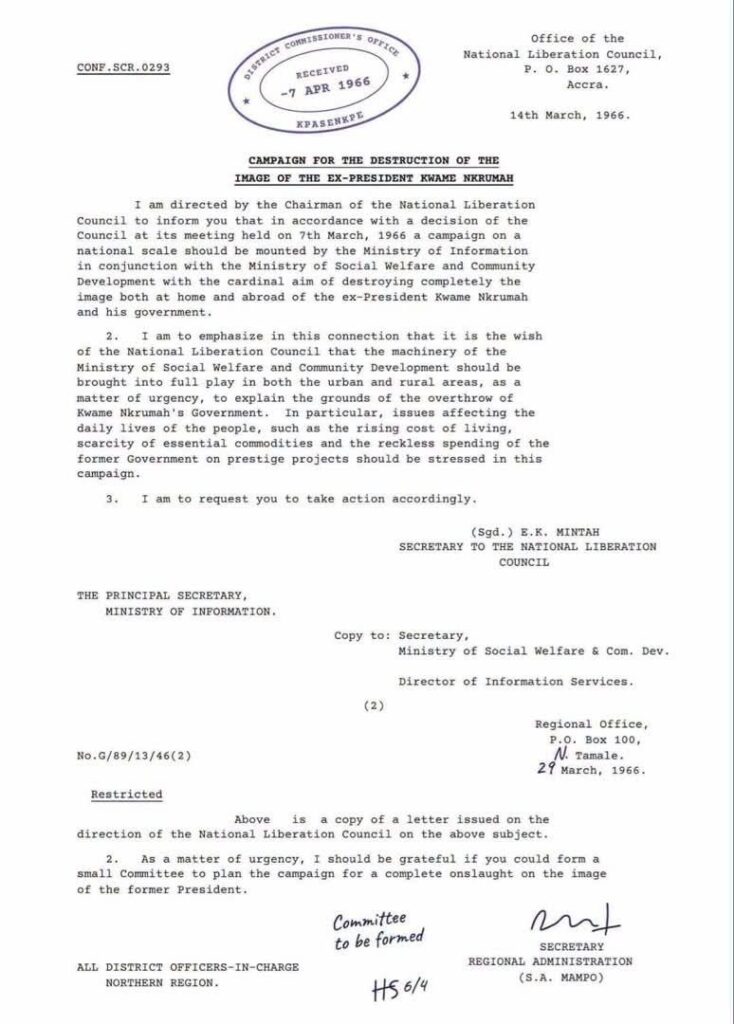
According to the document, officials were instructed to highlight economic hardship, the rising cost of living and scarcity of goods, and to attribute those challenges to Nkrumah’s administration.
Supporters of Nkrumah say the letter confirms what they have long argued — that negative public perception of Nkrumah after the coup was not accidental, but part of an officially coordinated propaganda effort by then UP/NLC.
A follow-up correspondence from the Regional Office in Tamale, dated 29th March 1966 and signed by S.A. Mampo, reportedly forwarded the directive to all District Officers in the Northern Region. It called for the formation of a committee to plan what it described as a “complete onslaught on the image of the former President.”
Nearly 60 years on, the document has sparked renewed discussion about Nkrumah’s legacy, the politics of the 1966 coup, and how history is remembered in Ghana.
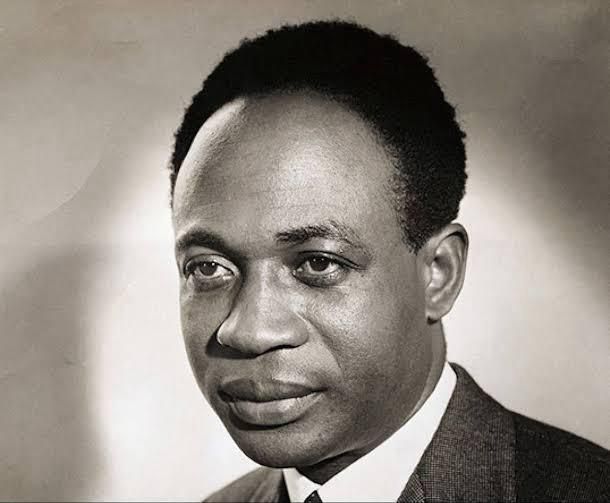
While critics of the NLC argue that the letter exposes a deliberate attempt at character assassination, historians note that the period remains deeply contested, with differing accounts of Nkrumah’s achievements and the challenges of his government.
What is not in dispute is Nkrumah’s enduring place in Ghanaian and African history — from the Akosombo Dam to Tema Harbour, from free education to his leading role in the Pan-African movement.
For many Ghanaians, the surfacing of the letter is a reminder that history is not only written by those who win power, but also revisited when hidden documents come to light.
Source: Nationaltymes.com