

By Lawrence Odoom

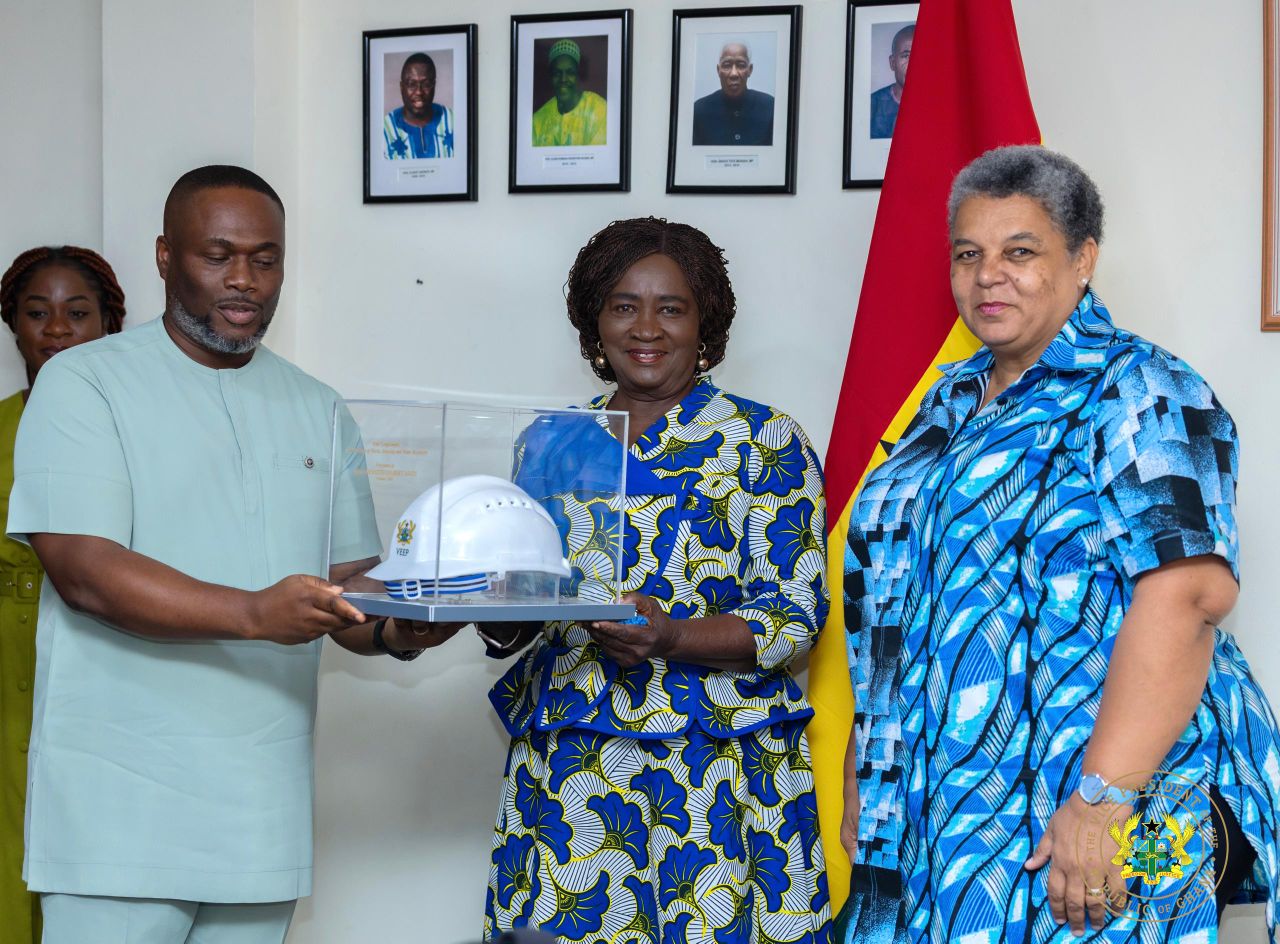
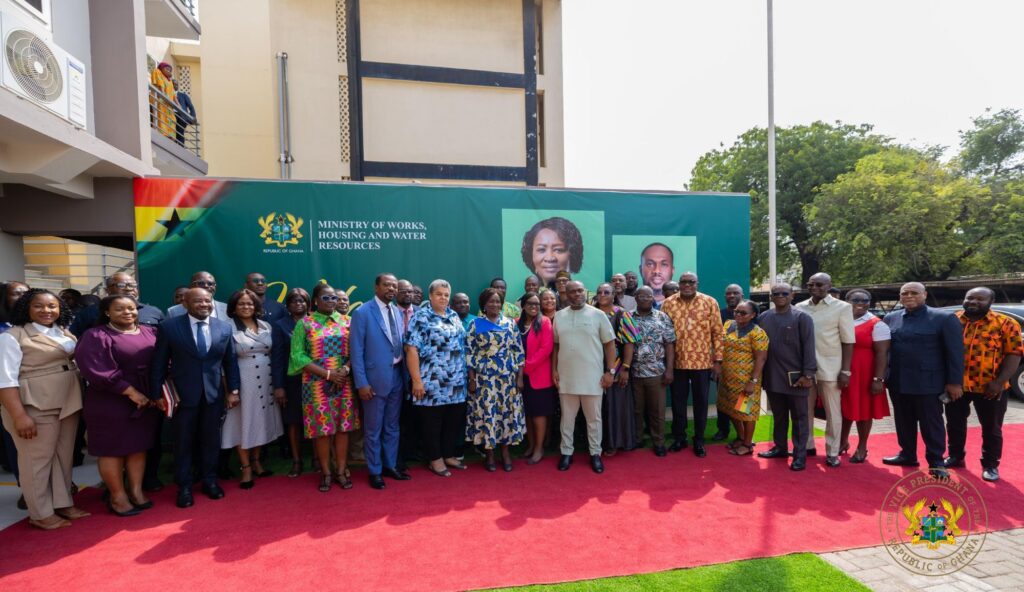
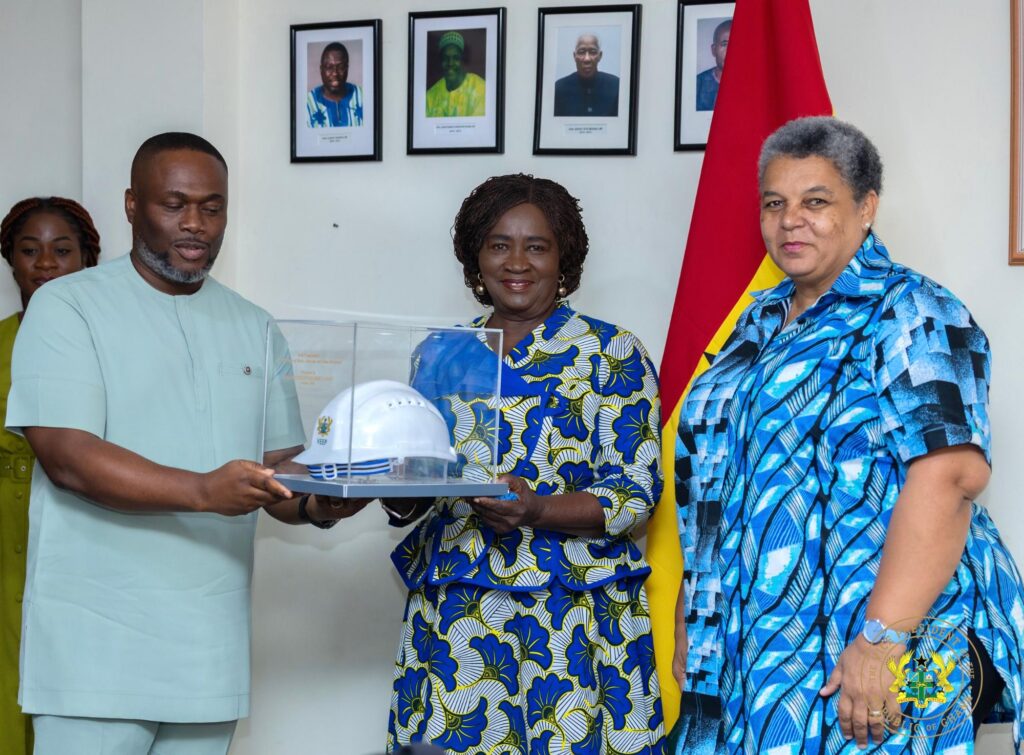
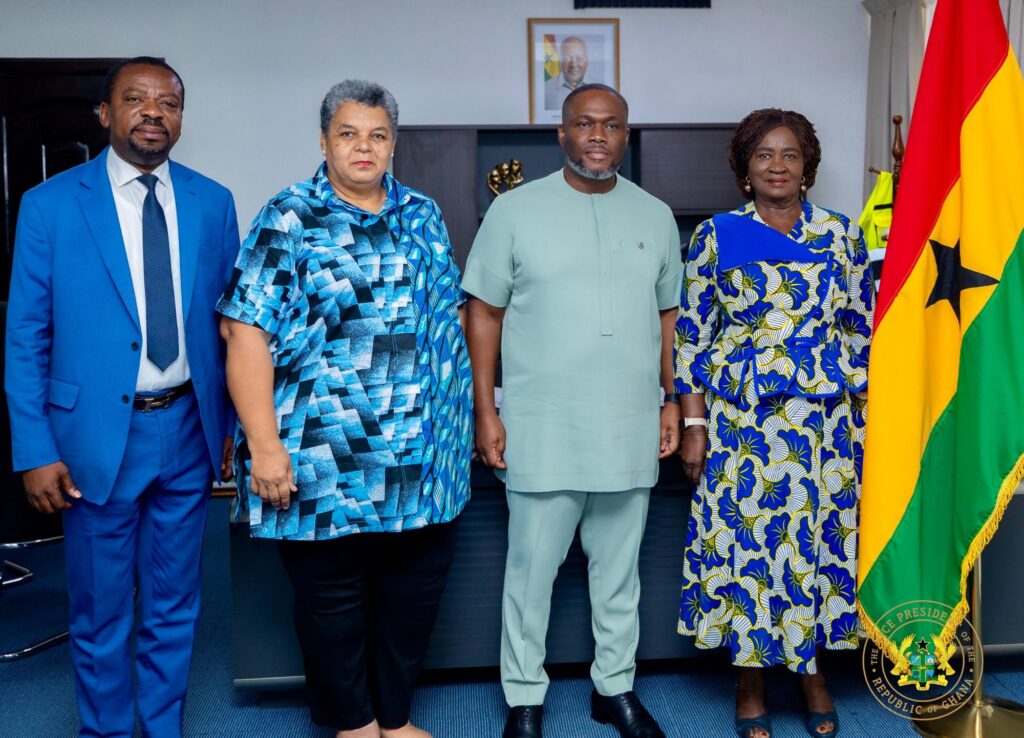
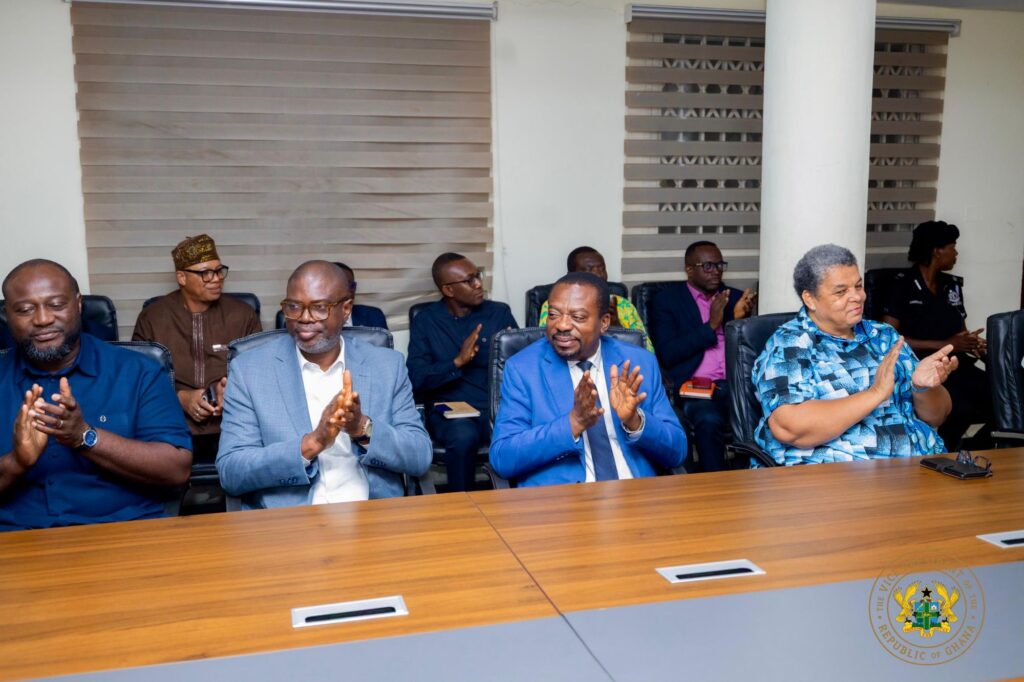
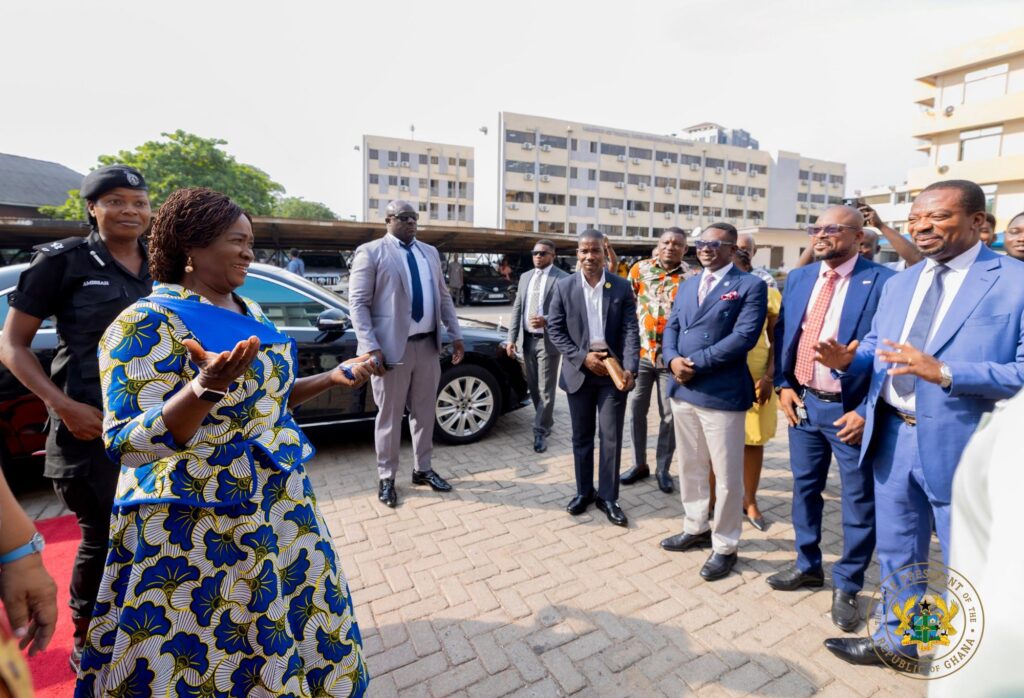
VICE PRESIDENT Prof. Jane Naana Opoku-Agyemang has reaffirmed government’s strong support for the Ministry of Works, Housing, and Water Resources, describing the Ministry as central to Ghana’s development and the well-being of its people.
She gave the assurance during a working visit to the Ministry, led by the sector Minister, Hon. Kenneth Gilbert Adjei. The Ministry operates through nine directorates and fourteen departments and agencies, with responsibilities that include flood control, housing delivery, coastal protection, and water resource management.
Officials briefed the Vice President on ongoing efforts to address the country’s persistent flooding challenges. These include the construction and desilting of storm drains, as well as the dredging of the Odaw Channel to improve water flow and reduce flood risks.
A senior official explained that the Ministry is also strengthening early warning systems and emergency response measures to help communities prepare better for floods and reduce loss of lives and property.
In the housing sector, the Ministry reported steady progress.
Several stalled affordable housing projects have been completed, while partnerships with private developers are being expanded to make housing more accessible across the country.
According to the Minister, initiatives such as the National Homeownership Fund and national redevelopment programmes demonstrate government’s commitment to reducing Ghana’s housing deficit, especially at the district level.
The Vice President was also updated on resettlement efforts following the Akosombo Dam spill. The programme is being rolled out in phases and is expected to deliver 2,225 housing units for affected communities.
In addition, work is progressing on the National Rental Assistance Scheme, and a review of the Rent Act—aimed at addressing high rent advances and hostel fees—is being prepared for Cabinet consideration. Despite these gains, the Ministry outlined key challenges, particularly water pollution caused by illegal mining and ageing water supply systems that limit efficient service delivery.
The Minister noted that ongoing projects in Takoradi, Wenchi, Keta, and other areas are designed to improve water infrastructure, but sustained and adequate funding is needed to fully close existing gaps.
In her response, Vice President Opoku-Agyemang acknowledged that some government interventions, especially in flood control and coastal protection, may be difficult and unpopular.
She stressed the importance of engaging affected communities and clearly explaining the reasons behind such decisions. She also called for respectful dialogue with coastal fishing communities, protection of rural settlements, and land-use planning that takes future generations into account.
The Vice President further encouraged stronger collaboration between the Ministry and training and research institutions to develop solutions that reflect Ghana’s environmental, cultural, and regional realities.
She emphasized the need for a transparent and principled relationship between government and the private sector—one that encourages investment while ensuring accountability and protecting the public interest. Commending the Ministry for its achievements so far, Prof. Opoku-Agyemang urged officials to work even harder and avoid operating in isolation.
She called for the breakdown of institutional silos and the pursuit of a unified national development agenda that values both visible results and the behind-the-scenes efforts of public servants whose work supports national progress.
Source: Nationaltymes.com